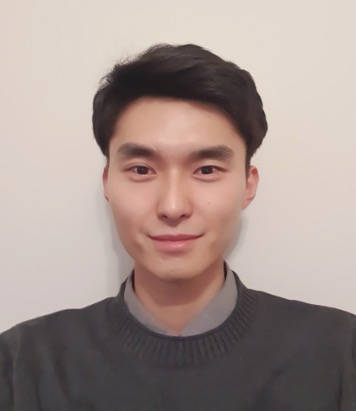
Seongmin Kim
Research Scientist, Quantum HPC Systems
National Center for Computational Sciences, Oak Ridge National Laboratory
I discover materials with quantum computing, AI, and high-performance computing, taking on design problems that are hard for classical computers alone.
About
I am a research scientist at Oak Ridge National Laboratory. My path runs from the laboratory bench to the quantum computer: I began by fabricating functional surfaces and membranes, moved to data-driven design of thermal and photonic materials, and now build algorithms and workflows that combine quantum computing, AI, and HPC.
My long-term goal is computational discovery of materials and devices with tailored thermal, optical, and energy-conversion properties.
Research experience
- Dec 2025 – presentResearch ScientistNational Center for Computational Sciences, Oak Ridge National Laboratory
- Dec 2023 – Nov 2025Postdoctoral Research AssociateNational Center for Computational Sciences, Oak Ridge National Laboratory
- Mar 2021 – Nov 2023Postdoctoral Research AssociateAerospace and Mechanical Engineering, University of Notre Dame
Research
Designing a functional material means choosing composition, geometry, and structure all at once. The number of candidates grows exponentially, the choices are discrete and strongly coupled, and every candidate is expensive to evaluate by simulation or experiment.
Classical optimization struggles as these problems become large and dense. I treat AI, quantum computing, and high-performance computing as one workflow for searching them.
How they work together
- Quantum computingSearches design spaces that overwhelm classical solversI develop distributed quantum optimization algorithms that break large, densely coupled, higher-order problems into pieces today’s quantum processors can run.
- Artificial intelligenceLearns from scarce, costly dataSurrogate models and active learning decide which candidates are worth evaluating next, which cuts the number of expensive simulations and experiments needed.
- AI for quantumLets AI write the quantum circuitsGenerative models produce quantum circuits for problems they have not seen before, which speeds up distributed quantum optimization, significantly reduces its cost, and lets it reach larger problems.
- High-performance computingMakes the workflow scaleSupercomputers coordinate problem decomposition, quantum and GPU execution, and high-fidelity simulation, so one loop runs from a design question to a validated answer.
Selected results
- 2026Generative AI that writes quantum circuits for distributed optimizationDQAOA-GPT, IEEE QCE26. Best Paper Award, 3rd place.
- 2026A distributed quantum optimization framework (DQOF) for dense, higher-order problemsnpj Quantum Information, accepted
- 2026Distributed quantum neural networks for scientific discovery and complex optimizationnpj Computational Materials
- 2026Distributed quantum optimization on a quantum-centric supercomputing architecturenpj Quantum Information
- 2025A benchmark of quantum annealing for combinatorial optimizationnpj Quantum Information
- 2022A transparent radiative cooler designed with quantum computing, then fabricated and measuredACS Energy Letters, Editors’ Choice
Publications
* corresponding author + co-first author
Under review and in preparation
Patents
- System for continuous oil/water separation using superhydrophilic oil/water separation filterUS 12678713 (2026), CN ZL 2020800976597 (2024), KR 10-2488605 (2023)
- Ultra-hydrophilic filtration filter for oil-water separation and method for manufacturing sameUS 12521658 (2026), CN ZL 2020800918252 (2024), KR 10-2392191 (2022)
- Eco-friendly hydrophobic or ultrahydrophobic coating methodUS 12146070 B2 (2024)
- Method for manufacturing polymer film and polymer film manufactured using the sameKR 10-1983974 (2019)
- Wide-angle spectral filter for energy-saving windows designed using quantum annealing-enhanced active learningUSPTO application 19/601,792 (2024)
Talks
Keynote, invited, and tutorial talks
- Nov 2026Integrating AI, Quantum Computing, and HPC for Scalable OptimizationInvited talk, IonQ Quantum House, Chicago
- Jun 2026Integration of quantum computing, artificial intelligence, and high-performance computing for accelerating materials discoveryKeynote, WISER Summer Quantum Program
- Mar 2026Accelerating scientific discovery through the integration of quantum computing, AI, and HPCGuest lecture, University of Notre Dame
- Sep 2025Large-scale optimization challenges on hybrid HPC quantum systemsInvited talk, IEEE QCE 2025, Albuquerque
- Sep 2025Distributed variational optimization algorithms on large-scale quantum-HPC ecosystemsInvited talk, IEEE QCE 2025, Albuquerque
- Jun 2025Overview of distributed variational optimization algorithms on large-scale quantum-HPC ecosystemsTutorial, ACM International Conference on Supercomputing (ICS 2025), Salt Lake City
- Jun 2025Distributed quantum algorithms on HPC-QC integrated systems for real-world optimization challengesInvited talk, Quantum Immersion Day: Tennessee Edition
- Apr 2025Variational quantum algorithmsTutorial, 2025 Industry Conference, Knoxville
- Nov 2024Active learning combining machine learning and quantum computing for material designInvited talk, Journal Club Seminar, Oak Ridge
Selected conference presentations
- Jul 2026Distributed quantum optimization framework for higher-order optimization problemsContributed talk, Quantum Computing User Forum, Oak Ridge
- Jun 2026Quantum-accelerated material discovery with machine learning and high-performance computingUSNCTAM26, Pasadena
- Mar 2026AI-assisted distributed quantum approximate optimization algorithm for solving Ising modelsAPS Global Physics Summit, Denver
- Jul 2025Many-qubit is all we need for optimization challengesContributed talk, Quantum Computing User Forum, Oak Ridge
- Sep 2024Active learning framework on the high-performance and quantum computing integrated system for large-scale optimization problemsLightning talk, Quantum Software 2.0 workshop, IEEE QCE 2024, Montreal
- Aug 2024Performance analysis of QAOA for metamaterial design on HPC and quantum systemsContributed talk, Quantum Computing User Forum, Oak Ridge
- May 2023Design of selective emitter using machine learning-quantum computing for high thermophotovoltaic system efficiencyTPV-14 (virtual)
- Apr 2023Design transparent radiative cooler using quantum computing-assisted active learningMRS Spring Meeting 2023, San Francisco
- Nov 2022Design transparent radiative cooler using machine learning and quantum computingASME IMECE 2022, Columbus
- Dec 2019Simple fabrication method of flexible and transparent superhydrophobic polymer filmICAM-BM, Beijing
Awards
- Sep 2026Best Paper Award, 3rd placeIEEE Quantum Week (QCE26), Quantum–GenAI Co-Design and Co-Discovery Track
- Mar 2026Supplemental Performance Award, Significant AchievementOak Ridge National Laboratory, 2026 Q1
- Aug 2025Best Poster AwardOLCF User Meeting 2025
- Jun 2025Supplemental Performance Award, Significant AchievementOak Ridge National Laboratory, 2025 Q2
- Nov 2022Best Poster AwardASME IMECE 2022
- 2019 – 2021Best Paper Award, three timesPOSTECH (Feb 2019, Dec 2019, Jan 2021)
- Sep 2019Ph.D. Candidate FellowshipNational Research Foundation of Korea
Service
Editorial
- Guest Editor, “Quantum Information Science” collection, npj Computational Materials2026 – 2027. Leading the scientific scope and recruiting the guest editor team.
- Guest Editor, “Inverse Design of Photonic Applications Using Quantum and Classical Computing” special issue, IEEE Journal of Selected Topics in Quantum Electronics2025 – 2027
Program committees
- SC, the International Conference for High Performance Computing, Networking, Storage, and AnalysisSC25 and SC26
- IEEE International Conference on Quantum Computing and EngineeringQCE 2025 and QCE 2026
- ACM International Conference on SupercomputingICS 2025
Contact
I welcome questions about my papers, collaboration ideas, and invitations to speak.
Office
J301-06, Computational Sciences Building (5600)
Oak Ridge National Laboratory
Oak Ridge, TN 37830, USA